Modern control systems rely on clean, reliable signals. Sensors are out on the line measuring voltage, current, temperature, flow, and power, but your PLC or HMI only wants a stable, standardized input it can trust.
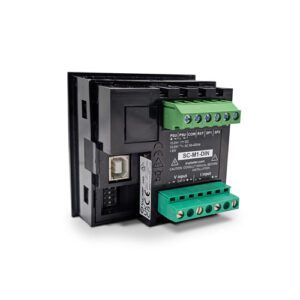
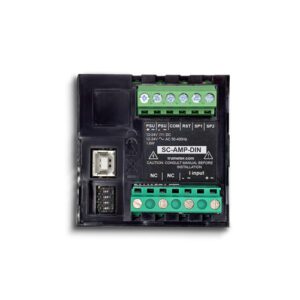
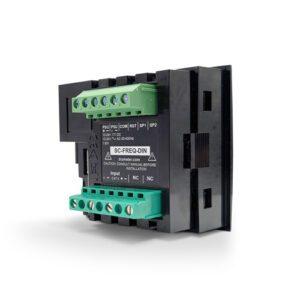
Signal conditioners sit between the field signal and the control hardware, converting, isolating, and scaling what the sensor sees, so your system gets a clean, predictable value every time. Trumeter’s recently announced signal conditioner range is designed specifically for this role. It covers voltage, current, temperature, frequency, and power in compact DIN rail formats that integrate easily into modern control panels.
Explore the Signal Conditioner Range

What Signal Conditioners Actually Do
At a high level, a signal conditioner typically handles three jobs:
- Convert one signal type into another (for example, from 0–600 V to 4–20 mA).
- Isolate the input from the output and power supply to protect sensitive equipment and avoid ground loops.
- Scale and clean the signal, so the controller sees a stable, meaningful value instead of noise, drift, or raw sensor output.
The Common Problems Signal Conditioners Solve
Even well-designed control systems run into the same challenges once they move from drawings to real panels. In practice, signal conditioners are often used to address issues such as:
- Noise and interference in motor-heavy environments or across long cable runs.
- Sensors from different vendors need to be standardized into a single PLC input range.
- Ground loops and stray voltages that cause unstable or drifting readings.
- Mismatched signal ranges, such as a high-voltage sensor feeding a low-voltage controller input.
- Limited options for adding alarms or remote visibility to critical process signals.
These are the practical realities of control panels that are built around.
What to Consider Before Choosing
What is the signal telling you?
Every signal begins with a measurement. This could be a voltage level, a motor load, a temperature reading, a pulse rate from a flow sensor, or overall power consumption. Knowing what you are measuring helps narrow the field quickly and avoids over- or under-specifying the device.
How does the rest of the system need to see it?
Sensors rarely speak the same language as PLCs, HMIs, or panel meters. Most control systems expect standardized, predictable signals that behave the same way regardless of sensor brand or field conditions.
Signal conditioners ensure the control system receives a clean, stable value it can trust. Thinking about this early helps align the signal with the rest of the system, rather than forcing workarounds later in programming or wiring.
How does it fit into the panel and the process?
A good choice for your panels fits cleanly into the panel layout, tolerates industrial environments, and supports the way the system is operated. Whether that means local indication, alarms, or future expansion into remote monitoring.
This question is less about specifications and more about longevity: choosing a device that will stay reliable, readable, and useful as the system grows.
Practical Applications
Cleaning Up a Noisy Motor Signal
A motor’s current signal looks fine on paper, but in the panel, it jumps around whenever a drive starts or stops. The PLC reacts to noise instead of reality, triggering false alarms and confusing operators. A Signal conditioner stabilizes that input, isolates it from electrical interference, and delivers a steady value the controller can actually trust.
Making Mixed Sensors Play Nicely
A panel combines sensors from different vendors—each with its own output range and quirks—but the PLC expects one standard signal type across all inputs.
Instead of redesigning the control logic or replacing sensors, a signal conditioner brings everything into a common format, keeping the panel consistent and easier to maintain.
Protecting Control Hardware
High-energy circuits and sensitive I/O cards do not mix well. Without isolation, ground loops or stray voltages can slowly damage equipment or cause unpredictable behavior.
A signal conditioner acts as a buffer, separating the measurement from the control system and protecting both sides from each other.
Adding Alarms Without Rewriting the System
A process variable becomes critical—temperature, flow, or power—and the team needs a simple warning when it crosses a threshold.
Rather than reworking PLC logic, a signal conditioner with built-in alarm capability adds local protection quickly and cleanly.
Designing for Remote Monitoring and Future Upgrades
If your facility is moving toward remote monitoring or predictive maintenance, the choice of signal conditioners can help lay down that groundwork.
All Trumeter signal conditioners can connect to the APM Gateway and Trumeter Cloud. This connection adds:
- Web dashboards to see key signals from anywhere
- Data logging for trend and root cause analysis
- Email or optional SMS alerts when conditions move out of range
As a result, the same device that feeds a 4–20 mA loop locally can also become part of a bigger monitoring strategy without redesigning your panel.
Key Takeaways
Define what you’re measuring
Start with the physical signal coming from the field: voltage, current, temperature, frequency, or power. Knowing the source of the measurement sets the foundation for every decision that follows.
Decide what your controller should see
Most control systems expect standardized outputs such as 4–20 mA. These formats keep inputs predictable, while optional alarm outputs can add protection or alerts without additional system complexity.
Check where it will live
Signal conditioners operate inside real control cabinets. Panel layout, electrical noise, grounding practices, and isolation requirements all influence what will perform reliably over time.
Match the need to the right conditioner family
Once the signal, output, and environment are clear, selecting the appropriate conditioner family becomes straightforward: Voltage, Current, Temperature, Frequency/Rate, Power, or a configurable M1/M2 when flexibility is needed.
For a step-by-step technical guide, see Choosing the Right Signal Conditioner in the knowledgebase.
Frequently Asked Questions
What is a signal conditioner used for?
A signal conditioner prepares raw sensor signals, so they can be reliably read by control systems. It converts, isolates, and stabilizes measurements, so PLCs, HMIs, or panel meters receive a clean, standardized input they can trust.
What’s the difference between a signal conditioner and a PLC input card?
A PLC input card receives signals; a signal conditioner prepares them. The conditioner sits between the sensor and the PLC to clean up the signal, isolate it, and scale it into a predictable range before it ever reaches the controller.
Can one signal conditioner support alarms or warnings?
Yes. Many signal conditioners include configurable alarms or digital outputs. These can trigger local warnings or interlocks without requiring additional PLC logic or system changes.
Are signal conditioners only for analog signals?
No. While many applications use analog outputs like 4–20 mA, signal conditioners can also handle pulse, frequency, or rate signals and convert them into forms the control system can use consistently